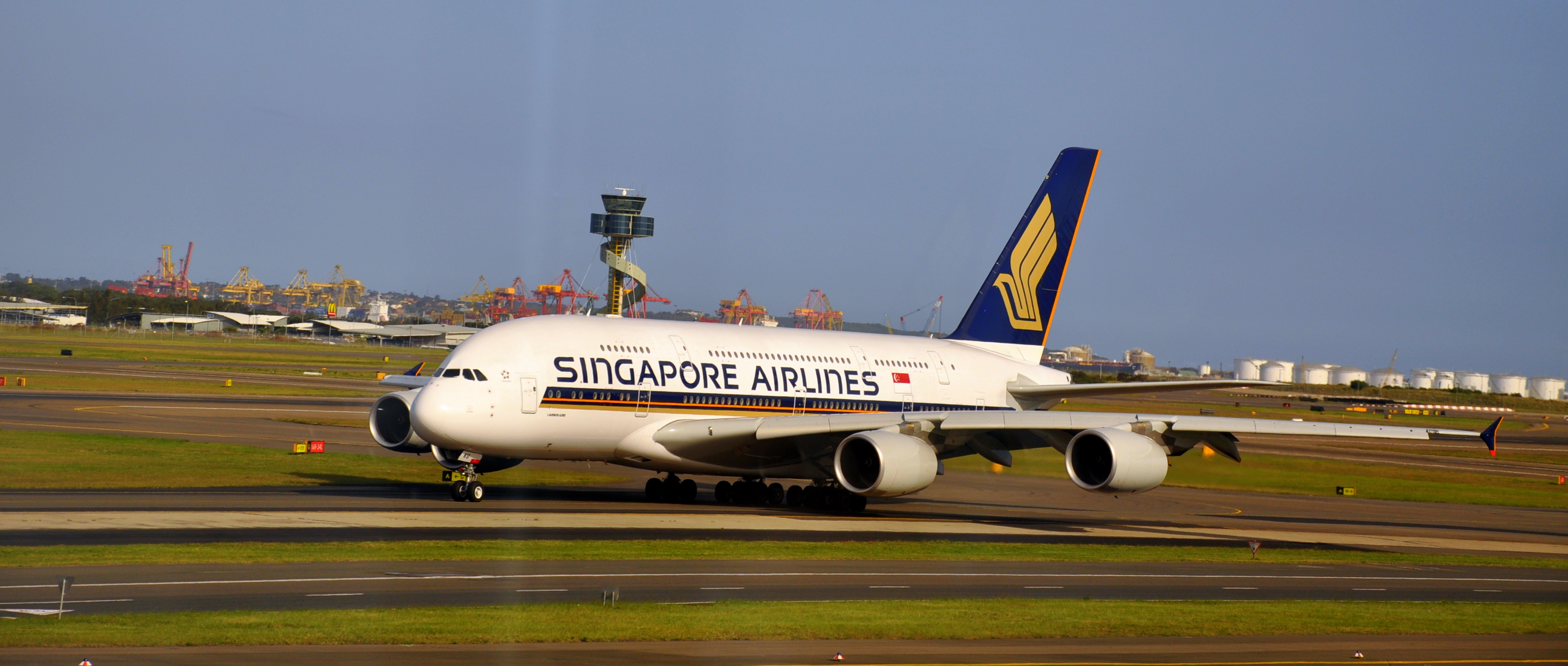
I did not fully appreciate the aircraft at the time, but I certainly remember how it felt. When Lynn and I flew on the A380 from Sydney to Singapore in October 2024, I knew very little about the Airbus A380. I understood that it was a very large passenger aircraft, of course, but I had not yet developed the interest in its cockpit, systems and operation that I have today.
Looking back, I wish I had taken more notice. I would have paid closer attention to the boarding arrangements, the enormous wings and the view along the cabin. I might even have asked whether it was possible to have a quick look upstairs. At the time, however, it was simply the aircraft taking us on our holiday.
Even so, two impressions stayed with me very clearly. The first was the cabin’s remarkable width. The second was something even more surprising: once we were flying, the aircraft seemed extraordinarily quiet and still. There was almost no sense of movement.
The flight details recorded in our itinerary give me a useful starting point for recreating the journey:
Our October 2024 flights, as recorded in our itinerary
Date
Flight
Route
Aircraft
9 October 2024
SQ232
Sydney → Singapore
Airbus A380-800
24 October 2024
SQ231
Singapore → Sydney
Airbus A380-800
There is something rather satisfying about discovering those details again. SQ232 wasn’t just a realistic route I could choose for the simulator. It was a real flight that Lynn and I had experienced together.
The Extraordinary Width of the Main Deck
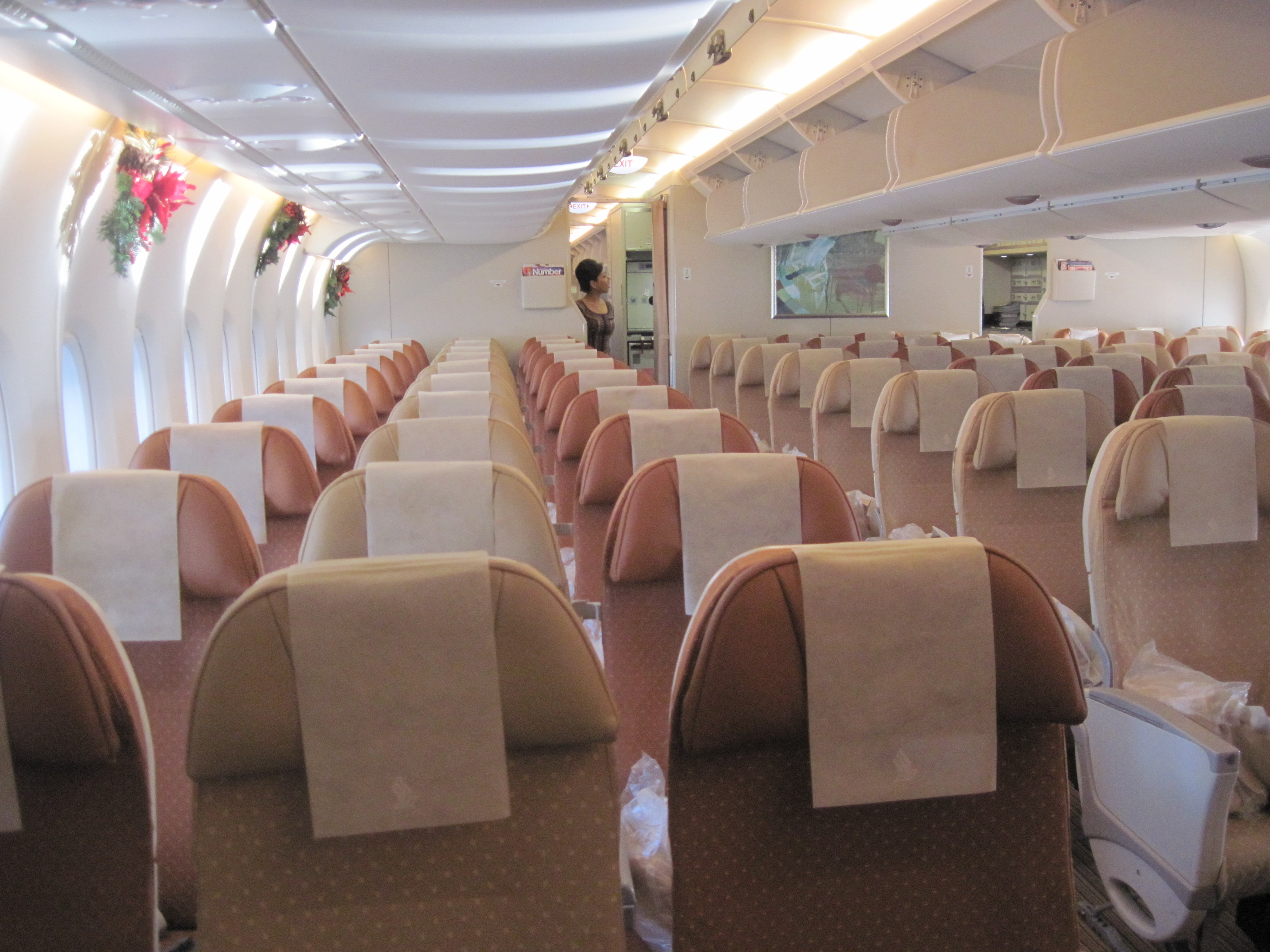
One of my strongest memories is walking toward the back of the aircraft and suddenly noticing just how wide it was. The main deck did not feel like the cabin of an ordinary airliner. It felt more like a very long room.
The A380’s broad main deck is a big part of its appeal. Singapore Airlines’ Economy layout has ten seats across, arranged 3-4-3, with two aisles. That sounds like a lot of seats, yet my strongest memory is of the space around us. Of course, cabin width and personal legroom are different things: the seat you choose still matters.
The impression becomes stronger when looking along a large section of the cabin. There are rows of seats, two aisles and a ceiling that seems surprisingly distant. It is only then that the scale of the aircraft becomes apparent.
An earlier Singapore Airlines main-deck Economy cabin, photographed in 2009. Seat finishes may differ from those on our 2024 flight.
Photo:
Rudy Herman / Wikimedia Commons,
CC BY 2.0.
Unmodified photograph.
Quiet, Still and Almost Motionless
What I remember most clearly is how quiet and still everything seemed. There was very little sensation of movement. We could have been sitting inside a building rather than travelling through the air at around 900 kilometres per hour.
It was not that the aircraft had stopped communicating with us completely. There would still have been the normal sounds of airflow, cabin activity and changes in engine power. Nevertheless, the overall impression was one of calm. The aircraft did not seem to be working hard, even though four large Rolls-Royce Trent 900 engines were carrying hundreds of passengers between Australia and Singapore.
There are two separate things here: a quiet cabin and a smooth ride. Airbus emphasises the A380’s low cabin noise, and that agrees with my own experience. Smoothness also depends on the weather and the aircraft’s motion at the time. Size alone does not guarantee a calm flight, and flexible wings or fly-by-wire controls do not make turbulence disappear.
We mainly feel changes in motion rather than steady cruising speed. That helps explain why an aircraft can be moving so quickly while its passengers feel almost stationary. I cannot tell you exactly which conditions made our flight feel so settled; I can only describe how it felt from my seat.
An A380 can certainly encounter turbulence. My memory of an unusually peaceful journey is a personal impression, rather than a promise about every flight.
Could We Have Gone Upstairs?
I now wish I could have explored the upper deck. At the time, however, I was not sure whether we would have been allowed—and in our case, we probably would not have been.
By 2024, the upper deck of Singapore Airlines’ refurbished A380s was reserved for its premium cabins. The six private Suites were positioned at the front, followed by Business Class. Economy and Premium Economy passengers were seated on the main deck.
That means the upper deck is not a general sightseeing area for Economy passengers. I would ask cabin crew before using the stairs or entering another cabin. Whether they could allow a brief look would depend on the circumstances and their instructions; it is not something I would assume was available.
Looking back, I would have liked to ask. But we did not miss an attraction that every passenger was entitled to explore.
Worth Knowing
The upper deck would not necessarily have felt larger. Because it sits within the curved upper portion of the fuselage, it feels narrower and more intimate. The main deck provides the most dramatic impression of the A380’s enormous internal width.
An Aircraft with a Special Connection to Sydney
Singapore Airlines and Sydney occupy an important place in A380 history. Singapore Airlines became the first carrier to operate the A380 commercially, and its first commercial passenger service flew from Singapore to Sydney on 25 October 2007.
Almost seventeen years later, Lynn and I travelled over the same city pair. We were participating in a small part of the aircraft’s story without realising how much I would later come to appreciate it.
The A380 was created to carry large numbers of passengers between major international hubs. The airline industry subsequently moved increasingly toward smaller twin-engine aircraft such as the Airbus A350 and Boeing 787, but the A380 has retained an unusually strong following among passengers. Its quietness, space and unmistakable double-deck shape give it a personality that is difficult to replace.
Discovering the A380 Again in Microsoft Flight Simulator
Flying the iniBuilds A380 for Microsoft Flight Simulator 2024 has brought the memory of that journey back in a completely different way. This time I am not sitting in the cabin with little knowledge of the aircraft. I am learning what happens on the flight deck and how much preparation is required before such a large aircraft moves away from the gate.
The simulator version allows me to explore the aircraft in ways that were impossible as a passenger. With the detailed cabin enabled, I can explore the model, move around the exterior, examine the landing gear, look along those enormous wings and watch the control surfaces working. More importantly, I can learn the flight-management system, calculate the takeoff performance and understand how the crew manages the aircraft from Sydney to Singapore.
The iniBuilds version includes both of the real A380’s engine families, but Singapore Airlines uses the Rolls-Royce Trent 900. That is therefore the correct engine choice when recreating SQ232 or SQ231. A suitable Singapore Airlines livery and the developer’s recommended SimBrief airframe would bring the recreation closer to our original flight. I would use a plausible passenger load: I do not know the actual passenger numbers or fuel carried on our journey.
iFly 737 MAX 8 SP1 for MSFS 2024 – Has This Aircraft Finally Come of Age?
Last Updated: June 2026
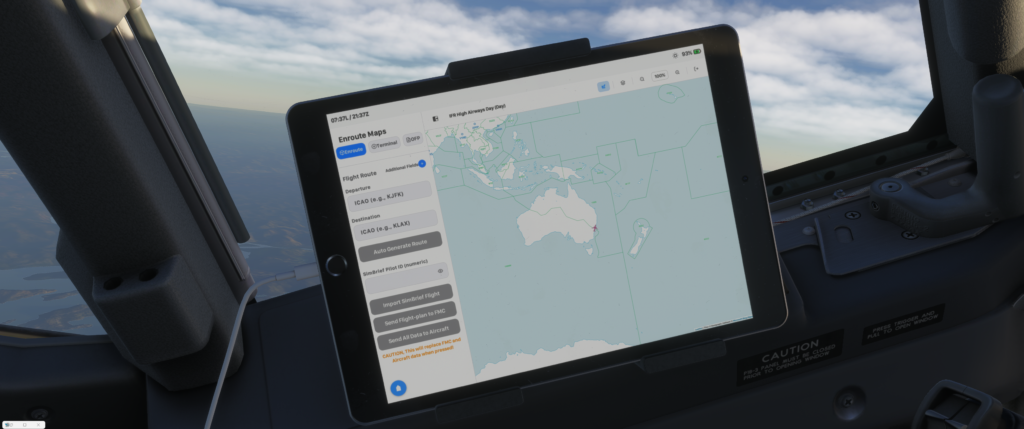
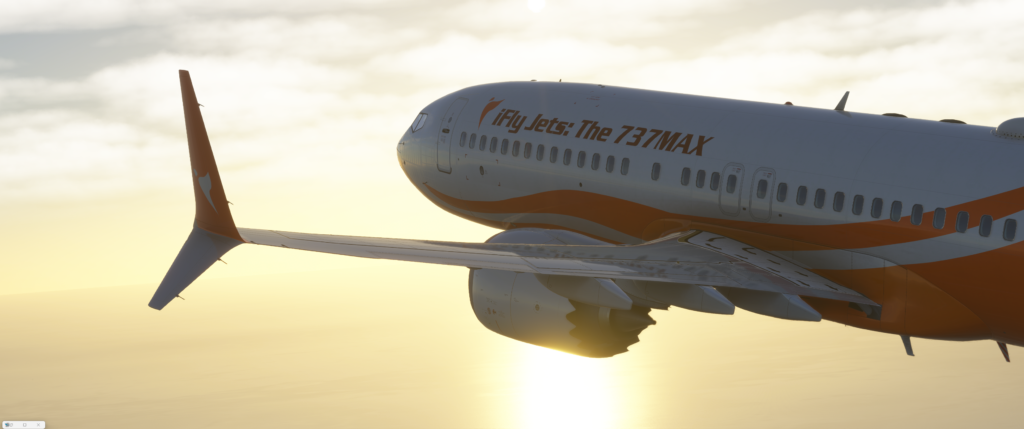
iFly 737 MAX 8 parked at the gate with the new SP1 EFB visible in the cockpit.
There are some aircraft that arrive in Microsoft Flight Simulator and immediately become popular. Then there are aircraft that arrive carrying a huge amount of expectation before most people have even flown them.
The iFly 737 MAX 8 firmly belongs in the second category.
Long before the aircraft appeared in Microsoft Flight Simulator, simmers were asking for a high-quality Boeing 737 MAX. While PMDG’s excellent 737 NG series had already established itself as one of the leading airliner products available, many Boeing fans wanted something newer. They wanted the aircraft they were increasingly seeing at airports around the world. They wanted the larger displays, updated cockpit, modern systems and distinctive appearance of Boeing’s latest generation narrow-body airliner.
When iFly announced they were bringing the MAX to Microsoft Flight Simulator, expectations immediately rose.
For Boeing enthusiasts, the attraction was obvious.
A modern Boeing airliner.
A highly detailed cockpit.
The latest generation 737 flight deck.
Advanced systems simulation.
A completely different experience from the traditional NG series.
The original release delivered much of what simmers were hoping for. The aircraft looked fantastic, sounded good, and gave Microsoft Flight Simulator users something they had wanted for a very long time.
However, the story didn’t end there.
While the original version was enjoyable, many simmers felt the aircraft still had room to grow. It felt like a product with tremendous potential rather than a product that had fully reached its destination.
After spending time with Service Pack 1, I think that journey has taken a very significant step forward.
I recently installed the latest version, completed a full flight, and recorded a cinematic showcase video for Flight Simulation Showcase. Rather than spending ten minutes exploring the cockpit at the gate, I wanted to experience the aircraft properly. That meant planning a complete flight, using the new EFB, operating the aircraft through normal procedures, and spending time watching it from the outside as well as flying it from the cockpit.
My conclusion was simple.
The iFly 737 MAX 8 no longer feels like an aircraft that is still finding its feet.
It feels like an aircraft that has matured.
What Makes the Boeing 737 MAX Different?
Before discussing the aircraft itself, it’s worth spending a few minutes talking about the real-world Boeing 737 MAX.
At first glance, the MAX looks very similar to the older 737 NG family. Many casual passengers probably wouldn’t know the difference. However, beneath the familiar Boeing shape are a number of important changes.
The MAX was designed to improve efficiency, reduce operating costs, and provide airlines with a more modern aircraft while still retaining much of the commonality that made the 737 so successful.
Some of the most noticeable changes include:
Larger and more efficient LEAP engines.
Improved fuel economy.
Advanced winglet design.
Updated cockpit displays.
Modernised flight deck systems.
Reduced operating costs for airlines.
From a flight simulation perspective, those cockpit improvements are particularly important.
The MAX feels modern.
While I still enjoy flying older aircraft, there is something appealing about sitting in a flight deck that feels contemporary and current. The larger displays and updated presentation help give the aircraft a very different personality compared to earlier generations of the 737.
That modern feel is one of the reasons simmers were so eager to get their hands on a quality MAX simulation.
The Original iFly MAX 8
When the iFly MAX 8 first arrived, I think most people would agree that it was already a very good aircraft.
The cockpit looked excellent.
The external model was impressive.
The aircraft captured the character of the real-world MAX surprisingly well.
Most importantly, it was enjoyable to fly.
However, there were also areas where the aircraft felt like it still had unfinished business.
That’s not unusual for a complex airliner. These products often continue evolving long after release. In fact, many of the most respected aircraft in flight simulation today are the result of years of refinement and development.
The original MAX had a few areas where simmers wanted more.
The EFB felt functional rather than exceptional.
Some areas lacked the polish found in more mature products.
Various features continued evolving through updates.
The aircraft occasionally felt as though its best days were still ahead of it.
Even so, there was something about the aircraft that kept people interested.
You could see the potential.
You could see where iFly was heading.
The foundations were already there.
The challenge was taking those foundations and turning them into a truly top-tier airliner.
Service Pack 1 Changes the Conversation
This brings us to Service Pack 1.
Sometimes developers release updates that fix bugs and improve stability. Those updates are important, but they don’t fundamentally change how people feel about an aircraft.
SP1 feels different.
After spending time with the latest version, I don’t think it’s unreasonable to describe it as a major milestone for the aircraft.
The headline feature is undoubtedly the new Electronic Flight Bag, but that only tells part of the story.
Throughout the aircraft there are signs of refinement, polish and maturity.
Collectively, these changes make the aircraft feel more complete than it did before.
A completely redesigned EFB.
Visual refinements.
Improved immersion.
Enhanced sounds.
Additional aircraft options.
Numerous fixes and improvements.
Individually, some of these changes may not sound dramatic.
Together, they significantly change the overall experience.
The New EFB Is the Star of the Show
iFly New EFB
If there is one feature that immediately stands out in Service Pack 1, it is the completely redesigned Electronic Flight Bag.
To be fair to iFly, the original EFB was never bad. It worked, it provided the information you needed, and it allowed you to perform the tasks required to operate the aircraft. The problem was that it never quite felt as polished as the rest of the aircraft.
In a modern airliner like the 737 MAX, the EFB is no longer just an optional extra sitting on the side of the cockpit. It has become an important part of the entire flight experience.
You interact with it throughout the flight process.
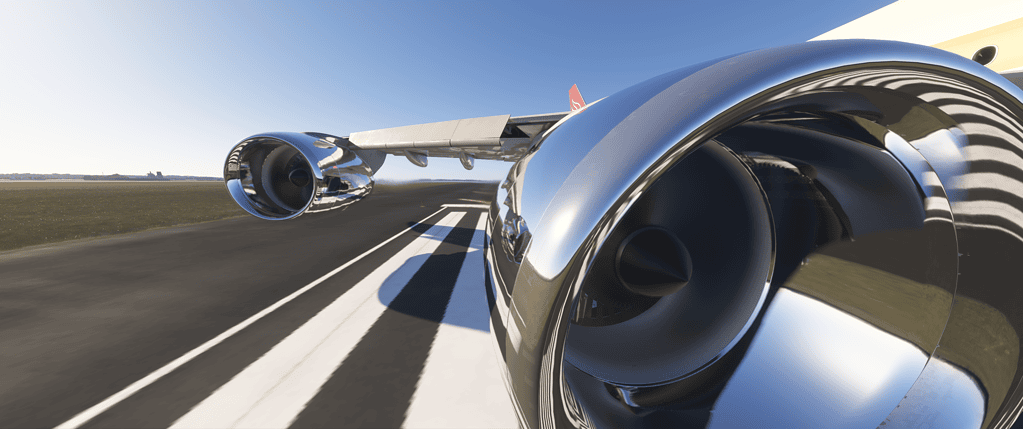
The combination of detailed modelling, excellent lighting, and the distinctive MAX design makes it particularly well suited to cinematic video production.
For content creators, that is actually a significant advantage.
How the Aircraft Feels to Fly
Visuals and features are important, but eventually every aircraft has to answer the same question.
Is it enjoyable to fly?
For me, the answer is yes.
One of the strengths of the iFly MAX 8 is that it manages to feel both familiar and modern at the same time.
If you’ve spent years flying Boeing aircraft, you’ll immediately feel at home.
At the same time, the updated cockpit presentation and modern systems make the aircraft feel like a genuine step forward from older generations.
Perhaps the biggest compliment I can give it is this.
At no point during the flight was I thinking about whether I liked the aircraft.
I was simply flying it.
That may sound like a small thing, but it isn’t.
The best aircraft disappear.
They allow you to focus on the flight rather than the software.
The latest version of the iFly MAX 8 comes much closer to achieving that than earlier versions ever did.
Visuals, Sounds, and Overall Immersion
Another area that deserves recognition is immersion.
Service Pack 1 feels more polished throughout the aircraft.
The visual quality remains one of its strongest areas.
The cockpit is detailed and modern.
The displays are crisp.
The lighting is attractive during both daytime and nighttime operations.
The external model continues to impress.
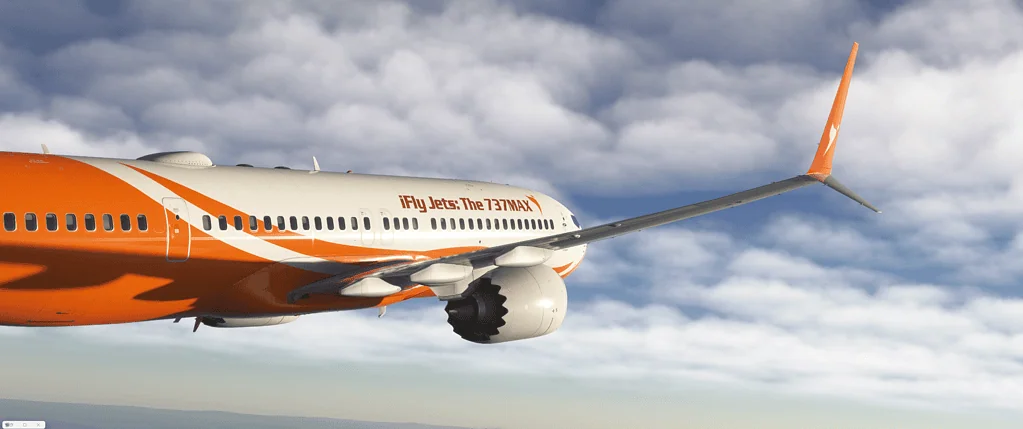
Excellent winglet modelling.
Highly detailed engines.
Quality textures throughout.
Strong lighting effects.
Excellent external presentation for screenshots and videos.
The sounds have also improved.
Sound is often overlooked when people discuss aircraft add-ons, but it plays a huge role in creating atmosphere.
The aircraft now feels more alive.
The various cockpit sounds, environmental sounds, and engine sounds all contribute to the experience.
Taken together, the visual and audio improvements help create an aircraft that feels more complete than ever before.
Is It Finally Ready to Challenge PMDG?
This is probably the question that many Boeing fans will be asking.
For years, PMDG has been the benchmark for Boeing airliners in flight simulation. Their aircraft are respected for their systems depth, reliability, and overall quality. That’s a reputation that has been earned through years of development and refinement.
The reality is that comparing the iFly MAX 8 and PMDG’s 737 NG series is not always straightforward because they represent different generations of the Boeing 737.
However, some obvious comparisons simmers will naturally make.
Both aircraft target serious Boeing enthusiasts.
Both focus on realism and immersion.
Both provide detailed systems simulation.
Both are designed for airline-style operations.
Both appeal to simmers looking for a high-fidelity experience.
Where things become interesting is in the areas where the MAX benefits from being a newer aircraft.
The overall package now feels polished enough that comparisons with PMDG are entirely justified.
That doesn’t necessarily mean one aircraft is better than the other.
What it does mean is that iFly has successfully moved the conversation from “Can it compete?” to “Which one do you prefer?”
That is a very different discussion.
Personally, I think that is one of the biggest achievements of Service Pack 1.
The aircraft no longer feels like an alternative to PMDG.
It feels like a genuine competitor.
iFly 787MAX. Flying at sunrise.
Who Should Buy the iFly MAX 8?
Not every aircraft is right for every simmer.
Fortunately, the iFly MAX 8 appeals to a fairly broad audience.
I think the aircraft will particularly appeal to:
Boeing enthusiasts.
Airline simulation fans.
Simmers who enjoy modern aircraft.
Virtual airline pilots.
Content creators and video producers.
Users looking for a high-quality long-haul narrow-body aircraft.
If your favourite flights involve realistic airline operations, route planning, cockpit procedures, and spending time learning an aircraft properly, there is a lot to like here.
The combination of the modern cockpit, excellent external modelling, and immersive atmosphere makes it enjoyable even when you’re not focusing on every switch and procedure.
What I’d Like to See Next
Although Service Pack 1 represents a major step forward, there are still things I’d love to see continue developing in the future.
That’s not criticism. It’s simply a reflection of how much potential the aircraft still has.
If I had a wishlist for future updates, it would include:
Continued optimisation for MSFS 2024.
Further refinement of the EFB.
Additional official liveries.
More cabin immersion features.
Continued visual improvements where appropriate.
Further expansion of the MAX family.
The encouraging thing is that iFly appears committed to ongoing development.
If the improvements seen in Service Pack 1 are any indication, the future looks very promising indeed.
Real Pilot Tip
One lesson I’ve learned over the years is that specifications only tell part of the story.
An aircraft can have hundreds of features and still fail to capture your imagination.
The best aircraft are the ones that make you want to plan another flight as soon as you’ve completed the current one.
For me, that’s one of the strongest compliments I can pay the iFly MAX 8 SP1.
After completing my showcase flight and finishing the recording, I immediately started thinking about where I wanted to fly it next.
That’s usually a sign that the developer has created something special.
Final Thoughts
The original iFly MAX 8 was already a good aircraft.
What Service Pack 1 has done is transform it into a significantly better one.
The redesigned EFB is excellent.
The aircraft feels more polished.
The sounds and immersion have improved.
The overall experience feels more mature and complete.
Most importantly, the aircraft is simply enjoyable to fly.
That may sound like an obvious statement, but it’s ultimately the reason most of us buy aircraft add-ons in the first place.
After spending time with Service Pack 1, I genuinely believe the iFly MAX 8 has become one of the standout Boeing airliners available for Microsoft Flight Simulator.
For Boeing fans, airline simulation enthusiasts, and anyone interested in a modern flight deck experience, this aircraft deserves serious consideration.
It has taken a long journey to get here, but in my opinion, the iFly MAX 8 has finally come of age.
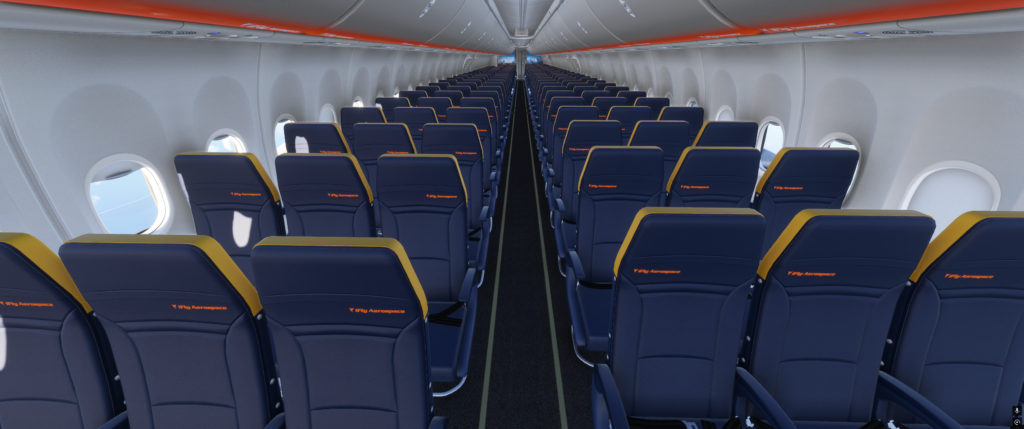
Inside the iFly Max aircraft, the cabin features realistic airline seating.
Frequently Asked Questions
Is Service Pack 1 a free update?
Yes. Existing owners of the iFly 737 MAX 8 can update to SP1 without purchasing a new aircraft.
What is the biggest improvement in SP1?
For many users, the redesigned Electronic Flight Bag will be the standout feature. It significantly improves the overall experience and makes aircraft setup much more enjoyable.
Can the iFly MAX 8 compete with PMDG?
In my opinion, yes. While both aircraft have their own strengths, Service Pack 1 has moved the iFly MAX 8 firmly into top-tier territory.
Is the aircraft suitable for Microsoft Flight Simulator 2024?
Yes. My experience with the aircraft in MSFS 2024 has been very positive, and the aircraft continues to improve as development progresses.
Is it good for content creation?
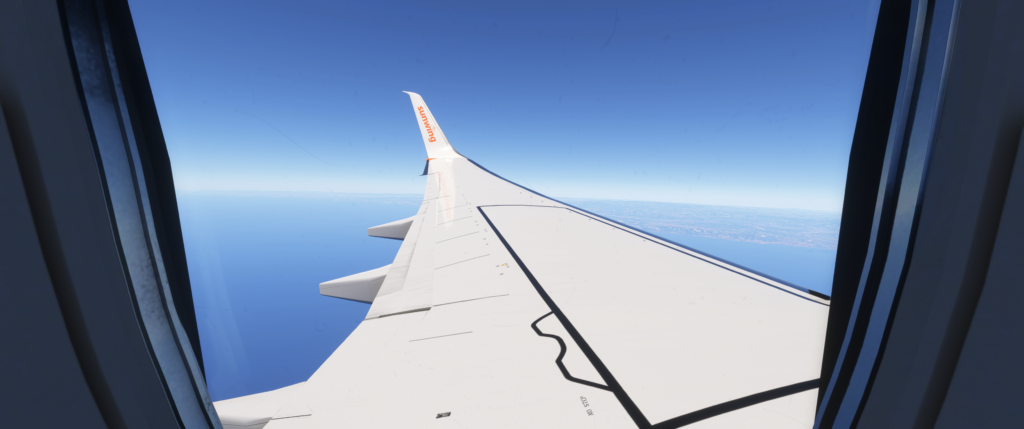
Absolutely. The aircraft’s excellent external modelling, modern cockpit, and attractive wing views make it particularly well suited to cinematic videos and screenshots.
Summary
The iFly 737 MAX 8 SP1 represents a major step forward for one of Microsoft’s most popular modern airliners. The redesigned EFB, improved immersion, refined visuals, enhanced sounds, and overall polish make the aircraft feel more complete than ever before. After completing a full showcase flight and spending time with the update, I believe the aircraft now deserves its place among the very best Boeing airliners available in Microsoft Flight Simulator.
Why This Update Feels Different
One thing became obvious very quickly after I started exploring Service Pack 1.
This doesn’t feel like a normal update.
Anyone who has spent time in flight simulation knows that many updates are largely maintenance releases. They fix bugs, improve stability, and perhaps add a few extra features. Those updates are important, but they rarely change how you feel about an aircraft.
Service Pack 1 feels different.
Instead of simply adding a few new features, this update changes the overall character of the aircraft. The MAX feels more mature, more polished, and more complete than it did before.
That’s actually quite difficult to measure because it’s not one specific feature that creates the impression.
It’s the way everything works together.
As I spent time with the aircraft, I found myself noticing lots of small improvements rather than a single dramatic change.
Individually, none of those things would necessarily transform an aircraft.
Together, however, they make a surprisingly large difference.
It’s similar to owning a car that has just come back from a major service. The engine might not have changed, the steering wheel might still be in the same place, and the car may look exactly the same from the outside. Yet somehow the entire vehicle feels better.
That’s the feeling I had flying the updated MAX.
The aircraft feels like it has reached a new stage in its development.
When the original version was released, I think many simmers saw enormous potential. The foundations were already there, but there were also areas where you could tell the aircraft was still evolving.
Service Pack 1 feels like the point where many of those pieces finally come together.
Rather than feeling like an aircraft with potential, it now feels like an aircraft that is beginning to fully realise that potential.
Perhaps the biggest compliment I can give the update is this: after a while, I stopped looking for changes and simply started enjoying the flight.
That is usually the moment when an aircraft moves from being technically impressive to genuinely enjoyable.
For me, that’s exactly what has happened with the iFly 737 MAX 8 SP1.
There are moments in life that stay with you forever — and for me, one of those moments happened sometime in the 1970s.
It was my very first time flying in an airliner.
I was on my way to Europe, and the first leg of the journey was from Sydney to Singapore. I can still remember stepping off the aircraft in Singapore and being hit by that wall of heat and humidity — something I’d never experienced before.
But what happened during that flight is what really stayed with me.
Flying Was Very Different Back Then
Flying in the 1970s was a very different experience to today.
There were no personal screens or digital entertainment.
Instead, movies were shown using a projector and a large screen at the front of the cabin. Depending on where you were seated, you might have had a reasonable view — or not much at all.
Passengers were given simple in-ear headsets, sealed in clear plastic bags. I remember they weren’t free — I think we paid about $2 for them, which at the time felt like part of the whole duty or tax side of international travel.
It all felt very basic compared to today — but at the time, it was just part of the experience.
My First Time in a 747 Cockpit
At around 2 am, I asked the stewardess if I might be allowed to go up to the flight deck to see it. I was subsequently allowed to go up to the flight deck.
Different times back then. Today, that would never happen — but in the 1970s, it wasn’t unusual under the right circumstances.
I was shown into the cockpit and seated on the observer’s jump seat, right in the middle. And what a sight it was.
The captain introduced himself and the rest of the crew, and then began explaining the cockpit to me — pointing out instruments and controls one by one. It wasn’t rushed at all. He took his time, and I remember being completely absorbed in what I was seeing and hearing.
A Flight Deck from Another Era
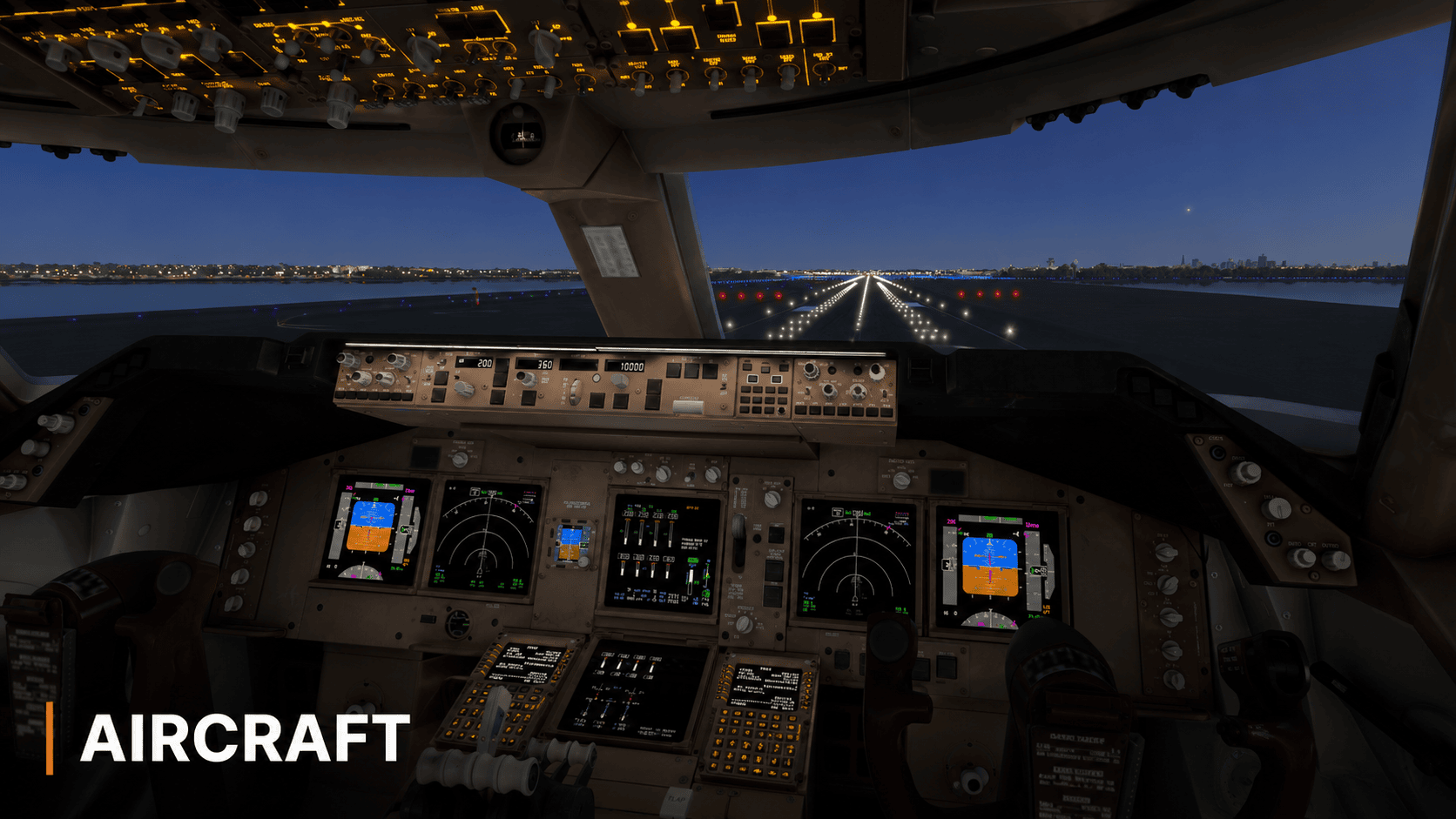
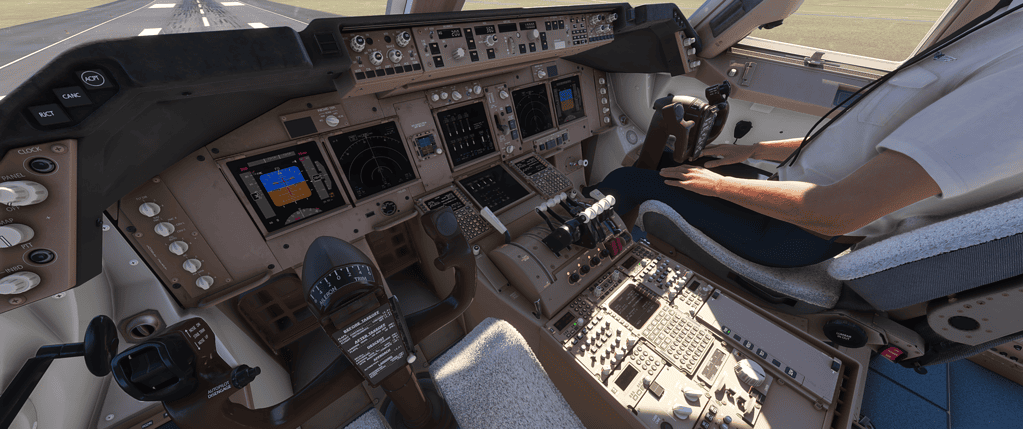
Note:The cockpit in this photo is from a more modern aircraft. Back in the 1970s, the 747 flight deck I saw was full of traditional analogue gauges and dials — a very different look to today.
This wasn’t the kind of cockpit world we know today.
In front of me was a wall of gauges, dials, switches, and softly glowing instruments.
The captain sat in the left seat
The first officer on the right
And behind them, the flight engineer at his panel, surrounded by systems controls
At one point, a stewardess brought me a coffee — something that probably wouldn’t happen today.
The Strangest Part… No Sensation of Movement
What struck me most wasn’t the complexity of the cockpit.
It was the complete lack of movement.
We were travelling at high speed at 35,000 feet — yet it felt perfectly still.
No sense of speed.
No vibration.
No feeling of motion at all.
Just a quiet, steady flight through the night. Then the captain pointed out something ahead.
A light — just slightly brighter than the others in the sky. He asked if I could see it. I said yes.
He told me it was another aircraft — one that had departed before us — and that it was about 50 miles ahead. That moment really stayed with me.
It made me realise just how vast the sky is — and how precisely everything is spaced and controlled.
Years Later — Inside a 747 on the Ground
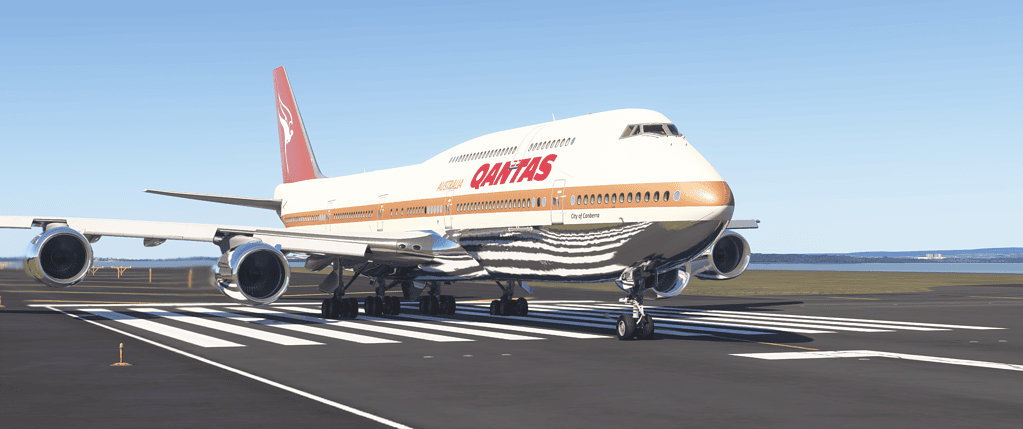
Many years later, I had another incredible experience with a 747 — this time on the ground.
A friend of mine, who had previously worked for Qantas, arranged for me to visit one of the maintenance hangars in Sydney.
It was a Sunday. No engineers. No activity. Just the two of us inside this enormous aircraft.
The aircraft was connected to external power, and at one point, he switched something on. Suddenly, the aircraft came to life — lights illuminating throughout the cockpit and cabin.
Then I heard a sound. A soft, steady noise — almost like rain on a roof. I remember asking what it was.
He told me it was simply the cooling fans.
I also remember him telling me how expensive parts of the aircraft were — particularly the cockpit windows — and mentioning the special coatings used in them for heating and demisting.
Why These Moments Stayed With Me
Looking back, those two experiences — one in the air at 35,000 feet, and one inside a quiet aircraft on the ground — gave me a perspective that’s stayed with me ever since.
One showed me the calm and stillness of flight.
The other revealed the engineering and scale behind it.
And together, they explain something I still believe today.
Flying might feel effortless… But behind that feeling is an extraordinary level of design, precision, and human skill.
A Note on Memory and Accuracy
As I’ve written this, I’ve taken the time to fact-check parts of what I remember from that night.
Some details — like the three-person cockpit crew (captain, first officer, and flight engineer), the observer’s jump seat, and even being able to see another aircraft at a distance — all align well with how these flights operated at the time.
Other details, such as the exact distance to the aircraft ahead or the materials used in the cockpit windows, are based on memory and later understanding and may not be exact in every respect.
But the experience itself — the feeling of being there — is something I remember clearly.
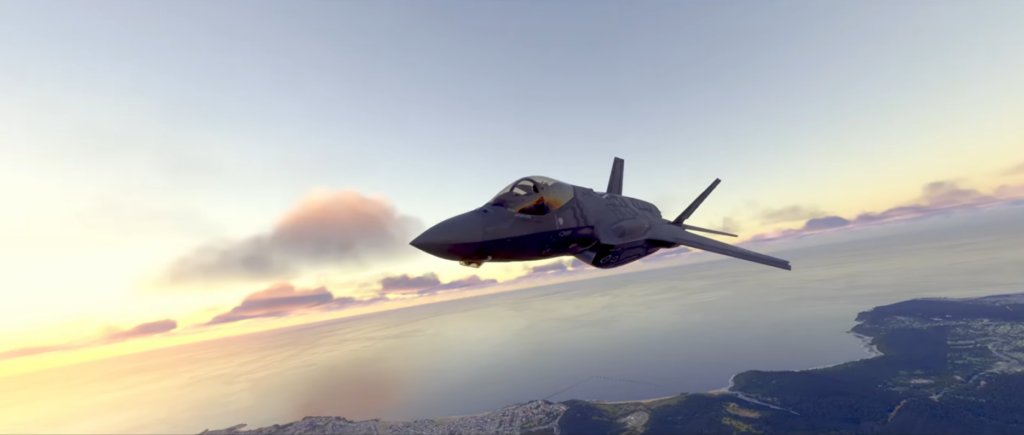
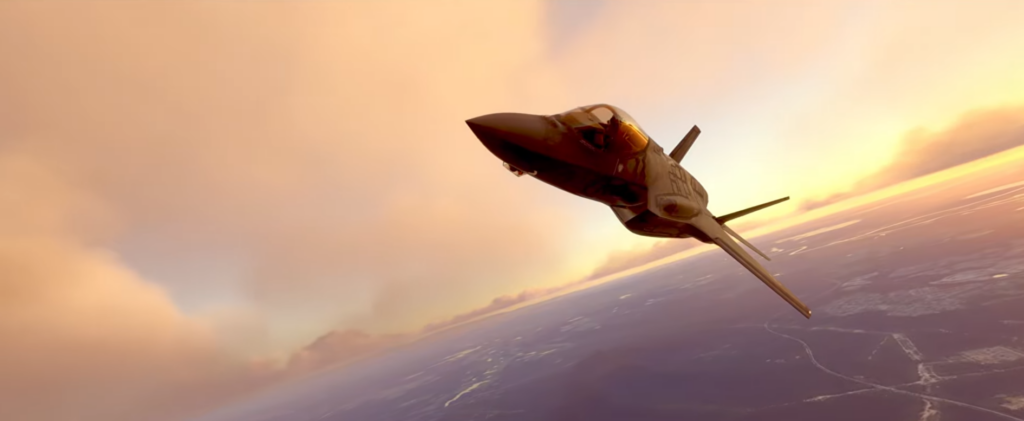
Few modern aircraft symbolize technological evolution like the F-35 Lightning II.
In Microsoft Flight Simulator 2024, flying the F-35 feels fundamentally different from civilian aviation. The “First Light” flight captures the aircraft in low-light conditions, where speed, digital clarity, and atmospheric immersion combine to create a distinctly modern flying experience.
This article explores what it feels like to operate the aircraft in the simulator — not as a review, but as a performance-focused flying experience.
First Impressions in the Cockpit
The F-35 cockpit feels clean and consolidated.
Large digital displays replace traditional analog clusters. Information is centralized. The environment feels streamlined rather than procedural.
There is less checklist repetition and more situational awareness. Even within the simulator, the aircraft communicates that it belongs to a different generation of aviation.
It feels advanced — but not overwhelming.
Thrust and Energy
Acceleration defines the experience.
Throttle input translates immediately into forward motion. Climb performance is assertive, and vertical maneuvering feels confident and controlled.
Unlike heavier airliners, the F-35 allows rapid energy changes — but that does not remove the need for discipline. Smooth inputs remain essential. Excessive control movement is amplified at speed.
For sim pilots strengthening foundational planning and energy management before moving into high-performance aircraft, the Microsoft Flight Simulator 2024 Beginner Guide provides structured guidance.
Smooth frame delivery becomes especially important in high-speed, low-light flying, and the MSFS 2024 Performance Settings Guide outlines how to balance visual fidelity and stability.
If control response ever feels overly sensitive in agile aircraft, the MSFS 2024 Controls Not Working? article walks through calibration and sensitivity curve adjustments to restore precision.
It blends thrust, digital clarity, and atmospheric immersion into a distinctly modern flight experience. Within the Aircraft series, it represents the high-performance edge — a sharp contrast to heritage warbirds and structured airline operations.
It is not about automation. It is about capability
F/A-18 Super Hornet MSFS 2024. This aircraft represents a different kind of performance in Microsoft Flight Simulator 2024.
Where the F-35 feels digitally refined, the Super Hornet feels mechanical and purposeful. It is powerful, versatile, and physically engaging — especially in low-light conditions where speed and control precision define the experience.
The Super Hornet cockpit feels functional and mission-oriented.
It combines digital displays with traditional fighter ergonomics. Unlike civilian aircraft, the environment is compact and purpose-built for performance.
Visibility is excellent. Situational awareness feels immediate. The aircraft encourages active flying rather than passive management.
You are not managing passengers. You are flying a machine.
Thrust and Agility
The Super Hornet delivers confident thrust and assertive climb performance.
Acceleration feels immediate. Vertical maneuvers are decisive. Roll response is strong without feeling unstable.
Unlike heavier aircraft, the F/A-18 responds quickly to control inputs. That responsiveness requires discipline — abrupt movements translate instantly.
Aggressive handling is possible — but controlled, intentional input delivers the most satisfying results.
Landing approach discipline becomes especially important in high-performance aircraft. Speed management, descent planning, and flare timing must be deliberate.
Even in a fighter jet, fundamentals still apply.
High-performance aircraft amplify core flying fundamentals. If you are refining approach stability in fast jets, our guide on why landings feel unstable in MSFS 2024 explains how speed discipline and flare timing directly affect touchdown quality.
For sim pilots strengthening foundational planning and energy management before transitioning into faster aircraft, the Microsoft Flight Simulator 2024 Beginner Guide provides structured guidance.
Smooth performance delivery is especially important in dusk operations, and the MSFS 2024 Performance Settings Guide outlines how to balance visual fidelity and stable frame rates.
If the control response ever feels too sensitive in agile jets, the MSFS 2024 Controls Not Working? The article walks through calibration and sensitivity curve adjustments that can improve precision significantly.
It blends power, agility, and atmospheric immersion into a performance-focused experience that feels distinctly different from civilian aviation. Within the Aircraft series, it completes the modern jet perspective — a tactile, responsive counterpart to both airline realism and heritage flying.
It rewards discipline. It rewards smoothness. And at dusk, it feels alive.
Spitfire Mk IXc MSFS 2024. Few aircraft carry the emotional weight of the Spitfire Mk IXc.
In Microsoft Flight Simulator 2024, flying the Spitfire is less about systems management and more about connection — to history, to aerodynamics, and to the sensation of flight itself.
This tribute flight highlights the aircraft’s character rather than its specifications. It’s an aircraft that demands attention, smooth control, and respect for energy state.
There is no glass panel. No automated flight director. No layered digital abstraction.
Instead, you fly by feel.
Visibility over the nose during taxi is limited — as expected. The canopy framing, the analog gauges, and the sound profile immediately shift the mindset from modern aviation to heritage flying.
It feels alive. Handling and Aerodynamic Character
The Spitfire Mk IXc rewards finesse.
Control inputs must be smooth. Overcorrection leads quickly to instability. Rudder coordination matters. Energy preservation is constant.
This is not a forgiving aircraft — but that’s precisely the appeal.
Roll response is lively. Pitch authority is sensitive. The aircraft communicates continuously through movement and sound.
Flying it well feels earned.
Energy Management and Respect
Unlike jets, the Spitfire demands that you think in terms of energy at all times.
Speed bleeds quickly in turns. Climb performance is strong but not unlimited. Descents require anticipation.
The approach discipline becomes especially important. The aircraft does not tolerate casual flare timing or rushed final corrections.
The reward for patience is a graceful landing that feels entirely manual — because it is.
Low-angle sunlight across the elliptical wings, subtle shadowing within the cockpit, and atmospheric haze at altitude contribute to the aircraft’s presence.
The Spitfire does not rely on complexity for immersion — it relies on character.
And that character translates exceptionally well in the simulator.
A Different Kind of Flying
The Spitfire shifts the mindset entirely.
There is no autopilot to manage workload. No VNAV to control descent. No automation to lean on.
Flying heritage aircraft also reinforces core simulator fundamentals. If you are refining approach discipline or flare timing in manual aircraft, our guide on why landings feel unstable in MSFS 2024 explains how speed control and energy awareness directly influence touchdown quality.
For those building foundational flying skills before moving into more complex aircraft, the Microsoft Flight Simulator 2024 Beginner Guide covers essential planning and control principles.
Smooth performance is equally important for immersive low-level flying, and the MSFS 2024 Performance Settings Guide helps balance visual fidelity with stable frame delivery.
If control sensitivity ever feels too aggressive in responsive aircraft like this, the MSFS 2024 Controls Not Working? The article walks through calibration and curve adjustments to restore precision.
It demands attention, rewards smooth input, and reconnects the pilot with the fundamentals of energy and control. Within the Aircraft series, it offers something completely different from modern jets — a tribute to mechanical flying and pure aerodynamic character.
The Cessna Citation X occupies a unique space in Microsoft Flight Simulator 2024.
It delivers jet performance without stepping into full airliner workflow. Fast, sleek, and purpose-built for executive operations, it rewards precision while remaining far more agile than a traditional narrow-body.
This flight showcases an executive-style sector, highlighting the aircraft’s high cruise speed, clean cockpit layout, and smooth descent profile. Rather than reviewing the aircraft, this article explores what it feels like to operate and where it fits inside the simulator.
Compared to larger airline aircraft, the workload feels streamlined. Systems are deep enough to remain engaging, yet the environment never feels overwhelming.
The aircraft’s forward visibility and balanced instrument layout contribute to a sense of control and situational awareness that suits high-speed executive flying.
It feels purposeful — not heavy.
Speed and Energy Management
What immediately defines the Citation X is speed.
Climb performance is assertive. Cruise speed is impressive. Descent planning demands attention.
Because of its performance envelope, anticipation matters. Managing vertical profile, configuring early, and respecting energy state are essential to maintaining smooth approaches.
Unlike heavier airliners, the Citation feels responsive, but it still demands discipline.
If your approaches feel rushed or unstable in faster aircraft, refining the energy control technique can make a significant difference. Our guide on why landings feel unstable in MSFS 2024 explains how speed discipline and flare timing directly affect touchdown quality, particularly in higher-performance jets.
Executive Mission Profile
Where the Citation X excels is in executive and business operations:
It feels ideal for structured IFR routes without the overhead of airline-scale procedures.
For sim pilots who enjoy realism but prefer shorter preparation times than full airline workflows, the Citation offers an elegant middle ground.
If you’re building IFR confidence or transitioning from default aircraft to more structured operations, our Microsoft Flight Simulator 2024 Beginner Guide covers core planning concepts that translate well into business jet flying.
The aircraft’s sleek fuselage reflects low-angle sunlight beautifully, and high-altitude cruise segments emphasize scale and atmospheric depth.
Executive flying often involves smooth, deliberate pacing — and in this flight, that pacing enhances immersion rather than spectacle.
Performance consistency is important in high-speed aircraft. If you experience frame dips during descent or airport transitions, our MSFS 2024 Performance Settings Guide can help balance visual fidelity and smoothness handling Characteristics
In contrast to larger airliners, the Citation X feels agile.
Control inputs translate cleanly. Pitch authority feels precise. Roll response is confident without being twitchy.
The aircraft encourages smooth, intentional inputs rather than abrupt corrections.
Proper sensitivity calibration matters here as well. If control response feels inconsistent, our MSFS 2024 Controls Not Working? The article walks through calibration and sensitivity adjustments that can significantly improve responsiveness.
Who This Aircraft Suits
The Citation X suits sim pilots who:
Enjoy high-speed jet performance
Prefer executive-style operations
Want realism without full airline complexity
Appreciate efficient cockpit workflow
It bridges the gap between general aviation and airline operations elegantly.
High-performance executive flying also connects closely with core simulator fundamentals. If you’re refining approach stability or flare timing in faster aircraft, our guide on why landings feel unstable in MSFS 2024 breaks down speed discipline and energy management in detail.
For those transitioning from default aircraft into more structured IFR operations, the Microsoft Flight Simulator 2024 Beginner Guide covers planning and workflow fundamentals that translate directly into business jet flying.
Performance consistency is equally important in high-speed descent phases, and the MSFS 2024 Performance Settings Guide explains how to balance visual quality and smooth frame delivery.
Finally, if control response ever feels inconsistent or overly sensitive, the MSFS 2024 Controls Not Working? The article walks through calibration and sensitivity adjustments that can restore precision.
It blends performance, efficiency, and responsiveness into a package that feels modern and deliberate. For executive mission profiles and high-speed IFR sectors, it delivers immersion without unnecessary complexity.
The PMDG 737-800 NG remains one of the most structured and immersive narrow-body airliner experiences available in Microsoft Flight Simulator 2024.
This flight features a Sydney Harbour flyby — a route that highlights low-level precision, energy management, and classic Boeing cockpit workflow. Rather than reviewing the aircraft, this article explores what it feels like to fly and where it excels inside the simulator.
For sim pilots still building IFR confidence, structured airline flying can feel demanding at first. If you’re new to airline procedures or automation logic, it may help to review our complete Microsoft Flight Simulator 2024 Beginner Guide, which covers the foundations of approach planning, speed management, and workflow discipline.
The layout is deliberate. The MCP sits confidently at eye level. Mode annunciations are clear. The workflow rewards discipline rather than improvisation.
This is not an aircraft that hides complexity — but it doesn’t overwhelm either. Everything is where you expect it to be, and once flows become familiar, the aircraft feels structured and predictable.
For sim pilots who enjoy traditional Boeing logic, that structure is deeply satisfying. Handling and Energy Management
The 737-800 carries weight — and you feel it.
During descent and approach, anticipation matters. Speed control must be deliberate. The aircraft rewards early planning rather than last-second corrections.
On the Sydney Harbour segment, maintaining smooth pitch control and disciplined speed management makes the difference between a stable pass and an unstable one.
The aircraft feels planted rather than light. It encourages precision.
Stable approaches in the 737 depend heavily on smooth control inputs and proper sensitivity settings. If your landings feel inconsistent or twitchy, see our guide on fixing MSFS 2024 controls not working properly, where we break down calibration and sensitivity adjustments that can improve precision dramatically.
Low-angle sunlight over Sydney Harbour brings out:
Cockpit shadow detail
Wing reflections
City texture depth
Atmospheric haze at a distance
The harbour flyby highlights how well this aircraft integrates with the simulator’s environmental rendering. It feels grounded in the world rather than floating above it.
At altitude, the final pass and contrail effect reinforce the scale that makes airline flying so compelling in the sim.
Performance consistency is equally important during low-level segments and detailed city flying. If you notice stutters or performance drops on approach, our MSFS 2024 Performance Settings Guide explains how to balance visual quality and smooth frame delivery.
Want realism without stepping into widebody complexity
It rewards discipline and planning — and once familiar, it becomes extremely satisfying to operate.
Structured airline flying also reinforces core simulator fundamentals. If you’re refining approach stability or flare timing in heavier aircraft, our guide on why landings feel unstable in MSFS 2024 explains how speed discipline and energy management directly influence touchdown quality.
For sim pilots building confidence with IFR planning and automation logic, the Microsoft Flight Simulator 2024 Beginner Guide covers foundational workflow principles that translate directly into narrow-body operations.
Smooth performance delivery is especially important during detailed city approaches, and the MSFS 2024 Performance Settings Guide explains how to balance visual fidelity with stable frame rates.
If control response ever feels inconsistent or overly sensitive, the MSFS 2024 Controls Not Working? article walks through calibration and sensitivity adjustments that can restore precision.
If you’re just getting started, our Microsoft Flight Simulator 2024 Beginner Guide explains the core setup, controls, and first-flight skills that support choosing the right aircraft in this Best Beginner Aircraft in FS2024 guide.
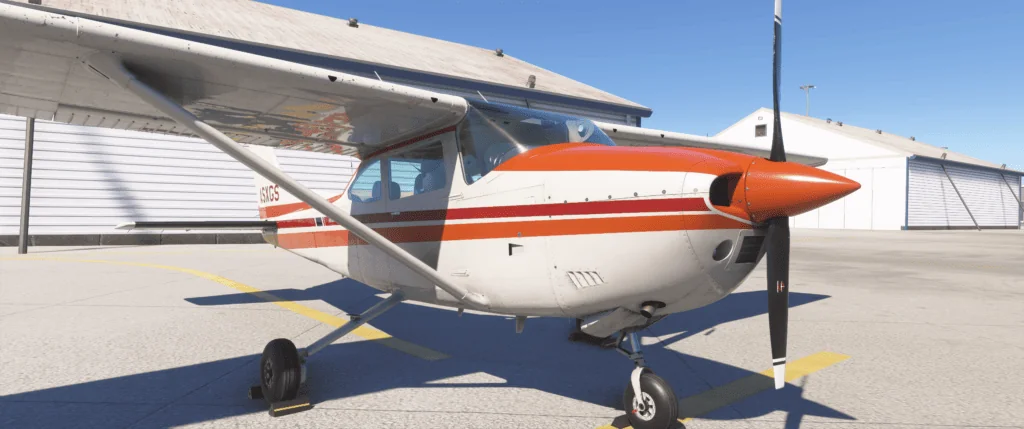
Starting in Microsoft Flight Simulator 2024 is exciting, but choosing the right aircraft can make a huge difference to how quickly you learn.
If you’re just getting started in the simulator, our detailed guide to MSFS 2024 ATC Tips explains how to follow clearances, manage approaches, and fly with confidence before moving on to theBest Beginner Aircraft in MSFS 2024.
Start simple, stay patient, and the simulator becomes far more rewarding. And before long, you’ll be confidently flying anything in the sky.
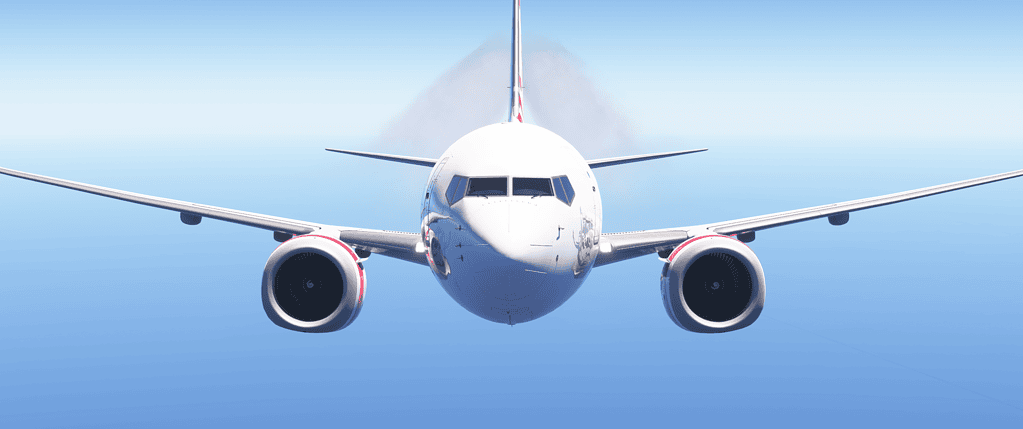
Many of the aircraft featured in this Best Beginner Aircraft in MSFS 2024 guide are based on real-world training planes widely used in aviation schools, and you can explore detailed aircraft specifications and performance data through trusted aviation resources such as Skybrary.